Posts

Showing posts with the label artist

Many Ways to Skin a Cat

Image
The Subject is Paper, Not Cat Skinning I don’t actually chase my cat around with the vacuum cleaner, but in a manner of speaking I do. I love my big black cat. However he sheds fur. It is the gathering of this fur, dust, breadcrumbs, lint, dry skin, gray human hair, popcorn, and additional random detritus that led me, upon emptying to the vacuum cleaner bag, to both imagine my cat being gathered in bits and pieces as well as my personal history with turning scraps of nothing into wonderful sheets of paper. Your name and contribution will come later. My cat’s name is Puck. Later on in this narrative I will use the phrase: “There are many ways to skin a cat”. I love my cat and generally that phrase is offensive, but being a common expression, I will use it. Historically, paper has been around as long as I can remember. I have memories of drawing upon sheets of paper as far back as the early 1950s, although there are those who insist paper existed even prior to my birth i...

Her Lucca Studio

Image
Her Lucca Studio One of my aunt Mary’s so-called failings was in her lack of dates and titles or locations On her paintings this canvas an exception 1962 it reads a view from her Lucca studio Across the flood plane of the Serchio bathed in crisp Tuscan morning sunlight 1962 seemed light filled until it wasn’t she crated her paintings sailed home After that November funeral exporting her own paintings back to the states a legal snarl This oil on canvas image bright and airy catches handfuls of promise and light It hangs in my daughter’s living room close to Lake Harriet far from Italy and 1962 Mary O'Hare oil on canvas 1962

A Couple of Artists Looking at the Same Thing

Image
Two Very Old Artists Looking at the Same Thing I watched as two older artists talked about that thing called painting One said she was amazed at how the paint hopped from her bucket onto the canvas dripping this way or that as it would Surprising her the next day by how it had dried She said she never wanted to be a famous artist just a really great one that let the paint do the work while she took the credit The other artist spoke of rolling paint over slippery glue Dictating situations in which the paint would dry into chance patterns Nudging chaos in lovely and mysterious ways Surprising him the next day by how it had dried He said he never wanted to be a famous artist just a really great one that let the paint do the work while he took the credit I watch these older artists talk about this activity this phenomenon called painting This fixing of paint to canvas into shapes and forms regardless of the excuse of which or whom is in control of how the pain...

Maybe I Am an Apple Tree

Image
Traditionally it works this way: The artist paints a picture. The art dealer shows it to a collector. Collector buys it and pays the dealer. The dealer gives a portion to the artist. The artist pays bills, which include studio rent. The dealer has bills to pay as well. The collector wakes up early each morning and smiles at the new framed artifact hanging in a hallway between the bedroom and bath. It works that way in fairy tales, the showing and sale of the artwork enable the artist to keep painting. It also gives the artist some emotional validation and an outlet for sharing his talent. What person doesn’t wish to share the fruits of his or her labors? It’s only natural we want others to taste, to read, to touch, to hear, to see, to appreciate what we do or make or create. “Come listen to this…”. It is human to want others to appreciate your work. But frankly, it can be a pain in the ass to stop working, when it is working that fills your spirit, just so others can take a peek...

The Boy Who Painted Blue Elephants

Image
The Boy Who Painted Blue Elephants He was an optimistic and hopeful young artist with buckets and buckets of promise. But at age 24 an ancient Roman elephant fell on him, breaking his only left leg and radically altering the remaining seventy-six years of his artistic career. From that day forward the focus of his paintings was the depiction of Evil and aggressive Elephants. Between 1971 and 1980 the elephant paintings were all limited to shades of blue. Art critics and historians suggested a link to Picasso’s “Blue Period.” However, the sad truth is he never really fancied and therefore did not want to emulate Pablo Picasso. Instead, the leg broken by the elephant event caused him to limp so severely that he veered toward the left. In the art supply store, where he purchased his supplies, colors were arranged with reds on the right side of the display and blues on the extreme left. No matter how much he might have wanted to buy a tube of cadmium red or yellow ochre, his l...

Alice Neel Said I Reminded Her of a Cat

Image
Alice Neel Said I Reminded Her of a Cat Before they met me people (might) have, thanks to my nickname, leapt to the seemingly logical assumption that since my artwork was wonderful, I was worthy to be a celebrated Woman Artist. Female artists such as Sandy Kinnee, deserve to be admired. I happened to have timed my entrance into the Art World better than M. E. O’Hare, who was a kick ass painter as well as being my aunt. When she was starting out in the 1940s, being a Woman Artist in a tiny gallery world designed for and run primarily by males, was not her choice. She chose the route of taking commissions and painting portraits. Her gender was obscured by her use of her initials. There were many women artists, few were taken seriously, despite the quality of their work. By the time I leapt into the first little puddle in the art world, there was an awareness that all along women had been making art and it was damn well time they be taken seriously. Women artists w...

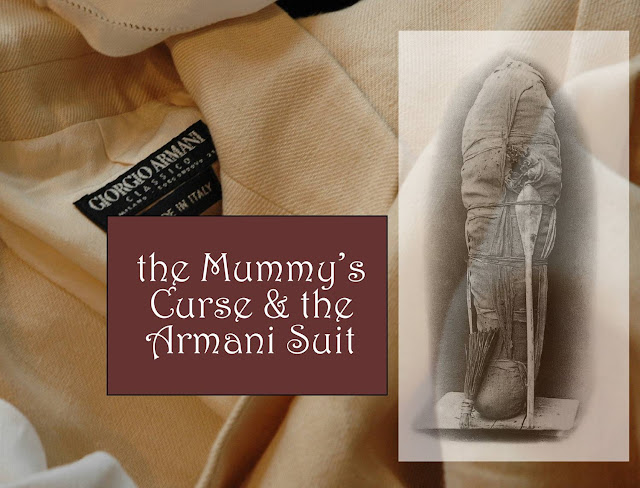
The Mummy's Curse and the Armani Suit

Image
    There’s a reason it’s called rag paper.   For centuries, ragpickers supplied the papermaking industry with cotton and linen. Discarded clothing scraps were the aluminum cans of the past. They provided a livelihood to the unskilled. At the dawn of the Industrial Age, everything changed. A rising bourgeoisie and the success of education lead to increasing demand for printed material. The impact upon paper and the rag   supply chain was unanticipated. Consumption of traditional cotton and linen scraps outstripped supply.   The price of rags rose. When demand for papermaking material exceeded supply, alternate sources were sought.    One long forgotten trove of very, very old rags was rediscovered in the 1800s: linen wrapped Egyptian mummies. A Maine papermill owner imported a boatload of them and removed the linen wrappings. The linen was then converted into pulp with the end product being butcher wrap.   Production of the brown   ...